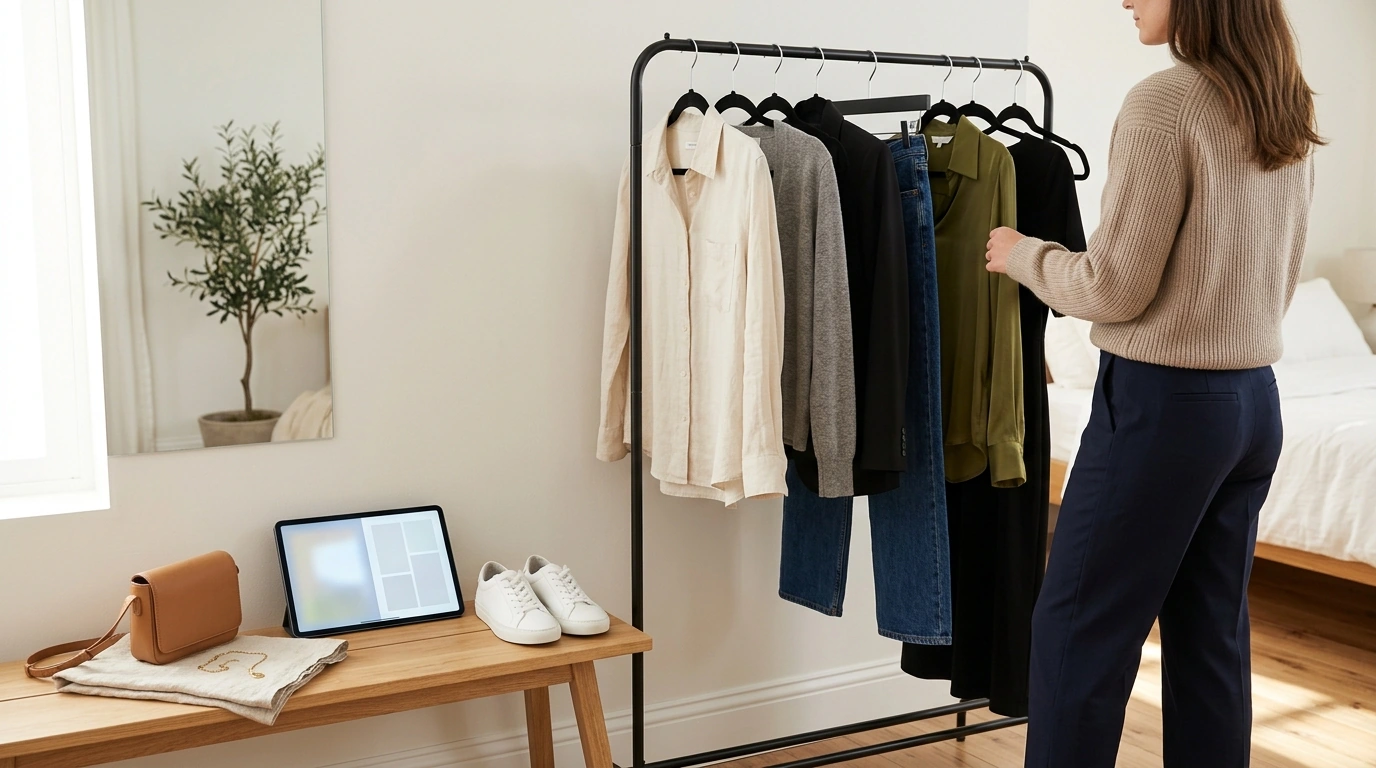
Confidence in what’s worn often comes from reducing uncertainty: knowing what flatters, having go-to combinations, and choosing colors and details that support the mood of the day. The goal isn’t a “perfect” wardrobe—it’s a reliable system that makes getting dressed feel clear, intentional, and energizing. Below are practical ways to build that system with outfit formulas, simplified capsule pieces, strategic accessories, and color psychology.
Confident style is usually quieter and more repeatable than it sounds. It’s less about constant reinvention and more about small choices that keep you comfortable, aligned, and ready to move.
There’s also research suggesting clothing can influence how people feel and perform—a concept often referred to as “enclothed cognition.” For a deeper look at the phenomenon, see this overview in Social Psychological and Personality Science.
When confidence feels shaky, speed and structure help. This routine keeps decisions simple while still leaving room for personality.
If you want a step-by-step version you can keep on your phone, the Fashion Confidence Boost | Digital eBook Guide breaks these habits into repeatable “plug-and-play” outfit formulas, capsule planning, accessories, and color choices.
A confidence capsule isn’t about owning less—it’s about owning pieces that connect easily, fit well, and don’t create daily friction.
| Core piece | Why it boosts confidence | Easy pairing | Best-for occasions |
|---|---|---|---|
| Tailored blazer or structured jacket | Adds instant polish and posture; creates clean lines | T-shirt + jeans + loafers | Work, meetings, dinner |
| Dark-wash jeans or tailored trousers | Reliable base; visually streamlined | Silky top + simple jewelry + ankle boots | Everyday, casual-smart |
| Knit top (crew or V-neck) | Comfortable, flattering, low-fuss | Trousers + belt + sneakers | Errands, travel |
| Button-up or crisp blouse | Feels intentional; sharpens proportions | Jeans + blazer + flats | Office, presentations |
| One “hero” dress | A one-piece solution for low-decision days | Add jacket + statement earrings | Events, dates, warm weather |
| Comfort-forward shoes (sneakers/loafers/boots) | Stability affects posture and mood | Any outfit formula as the grounding piece | All-day wear |
For a quick “confidence-on” option, a one-piece statement can do the work. The Sexy Mesh Print Mini Dress is a strong focal-point piece—keep accessories streamlined, add a jacket if you want more structure, and let the dress carry the energy.
Color is one of the fastest ways to steer how you feel walking into a room. Even small placements—earrings, a scarf, a top under a jacket—can change your energy. For a research overview on how color perception can influence psychological functioning, see this article from the National Library of Medicine.
Start with comfort and fit first, then limit choices with a small color palette. Use one or two outfit formulas on repeat and add a signature accessory until clear patterns show up.
Audit what you already reach for, then define two neutrals plus one or two accent colors. Add only the missing “connectors” (a versatile layer, comfortable shoes, reliable bottoms) and move high-fuss items out of daily rotation.
Blue supports calm competence, red adds presence, green feels balanced, and black reads authoritative when the fit is sharp. Place the color near your face and test it in both daylight and indoor lighting to confirm the effect.







Leave a comment