
Healthy eating gets easier when the goal shifts from “perfect” to “repeatable.” Instead of relying on willpower, you’ll build simple routines that work during long workdays, changing schedules, and the occasional craving. The result: steadier energy, fewer last-minute food decisions, and a pattern you can keep going without feeling deprived.
If you like visual guidelines for balanced meals, the USDA MyPlate Plan and the Harvard Healthy Eating Plate are solid references for building meals without overcomplicating it.
Big changes tend to break under real-life pressure. A “minimum effective” approach keeps the bar realistic, which makes consistency more likely.
Helpful default examples: Greek yogurt + fruit for breakfast, and a turkey wrap or hummus wrap for lunch. They’re quick, flexible, and easy to upgrade with extra produce.
Meals that keep you full and satisfied usually share the same structure: protein for staying power, fiber for volume and steadier energy, and healthy fats for satisfaction and flavor.
When time is tight, a “good enough” bowl works: microwave rice + canned beans + salsa + bagged greens + olive oil and lime. It’s not fancy, but it’s balanced and repeatable.
Meal planning doesn’t have to mean complicated recipes or hours in the kitchen. The goal is to make weekday choices easier by deciding a few basics ahead of time.
| Day | Breakfast (5 minutes) | Lunch (packable) | Dinner (simple) | Snack option |
|---|---|---|---|---|
| Day 1 | Greek yogurt + berries + granola/nuts | Turkey or hummus wrap + side fruit | Sheet-pan chicken/tofu + frozen veg + microwave rice | Apple + peanut butter |
| Day 2 | Eggs (or tofu scramble) + toast + spinach | Leftover sheet-pan bowl + salsa | Bean chili + salad kit | Cottage cheese (or edamame) |
| Day 3 | Overnight oats + chia + banana | Tuna/salmon packet + crackers + cut veggies | Stir-fry frozen veg + shrimp/tofu + noodles/rice | Dark chocolate + almonds |
When your kitchen supports your goals, “good choices” happen with less effort. Think of your environment as a quiet assistant that nudges you in the right direction.
For additional evidence-based guidance on healthy weight habits, the CDC’s healthy eating resources can help you keep the focus on realistic, sustainable actions.
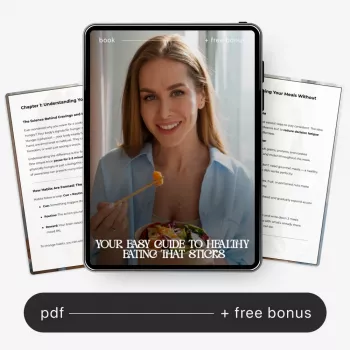
If you want a structured, beginner-friendly system with clear weekly actions and flexible meal ideas, Your Easy Guide to Healthy Eating That Sticks – Practical eBook for Beginners & Busy People | Simple Habits, Meal Planning & How to Stay Consistent with Healthy Eating is designed for busy schedules and a consistency-first approach—without complicated rules.
For support beyond food—especially if habits tend to slip when stress spikes—Break Free With Smart Support | Guide on How to Get AI Help for Breaking Bad Habits and Building Better Routines can help you build routines that hold up in real life.
For many people, it starts feeling easier after a few weeks of repetition. Stick to 1–3 small habits, keep meals simple, and measure progress by “most days” rather than perfection.
Use mix-and-match building blocks: choose 2 proteins, 2 vegetables, 2 carbs, and 2 sauces for the week. Repeat breakfasts and lunches, and keep two emergency meals on hand that require little or no cooking.
Skip the compensation and return to your normal schedule at the next meal. Prioritize hydration, include protein and produce, and plan one easy dinner so decision fatigue doesn’t drive more snacking.










Leave a comment