Mastering Work and Wellness in the Modern World: A Practical Balance System for Busy Professionals
Work can expand to fill every open tab, notification, and evening hour. Sustainable wellness, on the other hand, requires boundaries, recovery, and repeatable routines. This guide lays out a realistic system for balancing performance and health—built around energy management, stress skills, and simple planning—so daily demands don’t quietly become chronic overload.
What “balance” looks like in a digital-first workday
Balance isn’t equal time between work and life. It’s predictable recovery, stable energy, and real control over attention—especially in environments designed to interrupt you.
- Balance is predictable recovery: you can push hard when needed because recovery is built in (sleep, breaks, downtime).
- Modern stressors are structural: always-on messaging, stacked calendars, multitasking, and blurred home/work boundaries create constant “background urgency.”
- Early signs of imbalance: reduced sleep quality, irritability, constant urgency, reduced concentration, and “never done” thinking.
- A workable target: protect sleep, create focused work blocks, and schedule short recovery moments the same way meetings are scheduled.
Chronic stress has real downstream effects on the body, including sleep disruption and mood changes. For a deeper overview, see the American Psychological Association’s summary of stress effects.
Start with energy, not hours: sleep, movement, nutrition, sunlight
Time management helps, but energy management makes time usable. When energy is unstable, even simple tasks feel heavy and urgent.
- Sleep anchor: choose a consistent wake time and build your evening routine backward—screen cutoff, wind-down ritual, and bedroom cues that signal “off.” The National Sleep Foundation offers practical sleep health guidance.
- Micro-movement beats zero movement: 5–10 minutes between calls (walk, mobility, stairs) reduces stiffness and resets attention.
- Nutrition for stability: pair protein + fiber at meals to reduce energy crashes that get mislabeled as “stress.”
- Light and air: earlier daylight supports circadian rhythm; a short outdoor break can improve mood and alertness.
If work stress feels unrelenting, it may be worth reviewing how workload, control, and demands interact. The NIOSH overview on stress at work explains common risk factors and practical prevention angles.
A simple stress management toolkit for high-demand days
High-demand days don’t require a perfect routine. They require fast, repeatable skills that reduce physiological stress and keep decisions clean.
- Name the stressor: “too much to do” needs triage; “unclear priorities” needs clarification; “conflict” needs a conversation; “lack of recovery” needs a boundary and rest.
- Downshift fast: try 60–120 seconds of slow breathing with a longer exhale than inhale before replying to a tense message or joining a difficult meeting.
- Close loops: write the next physical action for a worry (draft the email, block 25 minutes, ask one clarifying question) to prevent rumination.
- Recover on purpose: pair intense work blocks with short breaks that actually restore—walking, stretching, hydration, or a brief mindfulness reset.
Boundaries that stick: attention, communication, and expectations
Boundaries are easiest to maintain when they’re specific, visible, and paired with a clear alternative (“Here’s when I can deliver” instead of only “no”).
- Attention boundaries: define two daily focus windows, silence nonessential notifications, and batch communication outside focus blocks.
- Calendar boundaries: cap meeting density with buffers (5–15 minutes) to prevent back-to-back cognitive overload.
- Communication boundaries: set response expectations (for example: “I check messages at 11 and 4”) and use status indicators intentionally.
- Emotional boundaries: prepare scripts for common pressure points—last-minute requests, scope creep, and unclear ownership.
A weekly rhythm that supports both output and recovery
Example weekly balance plan (adjust to workload and energy)
| Day |
Work focus |
Wellness anchor |
Boundary to protect |
| Monday |
Priorities + deep work block |
20–30 min walk at lunch |
No meetings in first focus hour |
| Tuesday |
Project execution |
Strength session (30 min) |
Batch messages 2x/day |
| Wednesday |
Collaboration + reviews |
Early bedtime target |
15-min buffer between meetings |
| Thursday |
Deep work + deliverables |
Outdoor daylight break |
Stop work at a set time |
| Friday |
Wrap-up + planning |
Light movement + stretch |
Weekly shutdown routine |
| Weekend |
Recovery + personal life |
Longer activity or hobby |
Minimal work email checking |
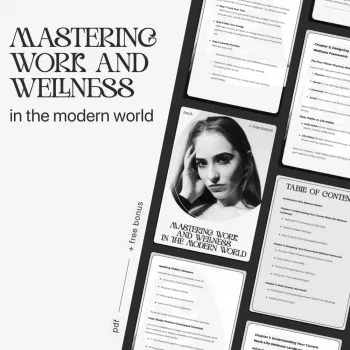
Using a guided digital planner to make the system easier
Pairing skills for long-term change: habits and hard conversations
FAQ
What’s the fastest way to feel less overwhelmed during a busy workday?
Take a 2-minute reset: slow breathing for 60–120 seconds, then write the next physical action for your top two worries. Pick one must-do outcome and schedule a short recovery break so stress doesn’t compound across the day.
How can boundaries be set without hurting performance or relationships?
Use clear expectations (response windows), add calendar buffers, and communicate proactively before problems build. Offer alternatives—when you can respond or what you can deliver—so boundaries feel like coordination, not refusal.
Is a digital planner actually helpful for work-life balance?
Yes—structure and prompts reduce decision fatigue and make weekly planning more consistent, especially when you’re under pressure. The key is starting small so wellness becomes scheduled actions instead of a vague intention.
Recommended for you













Leave a comment